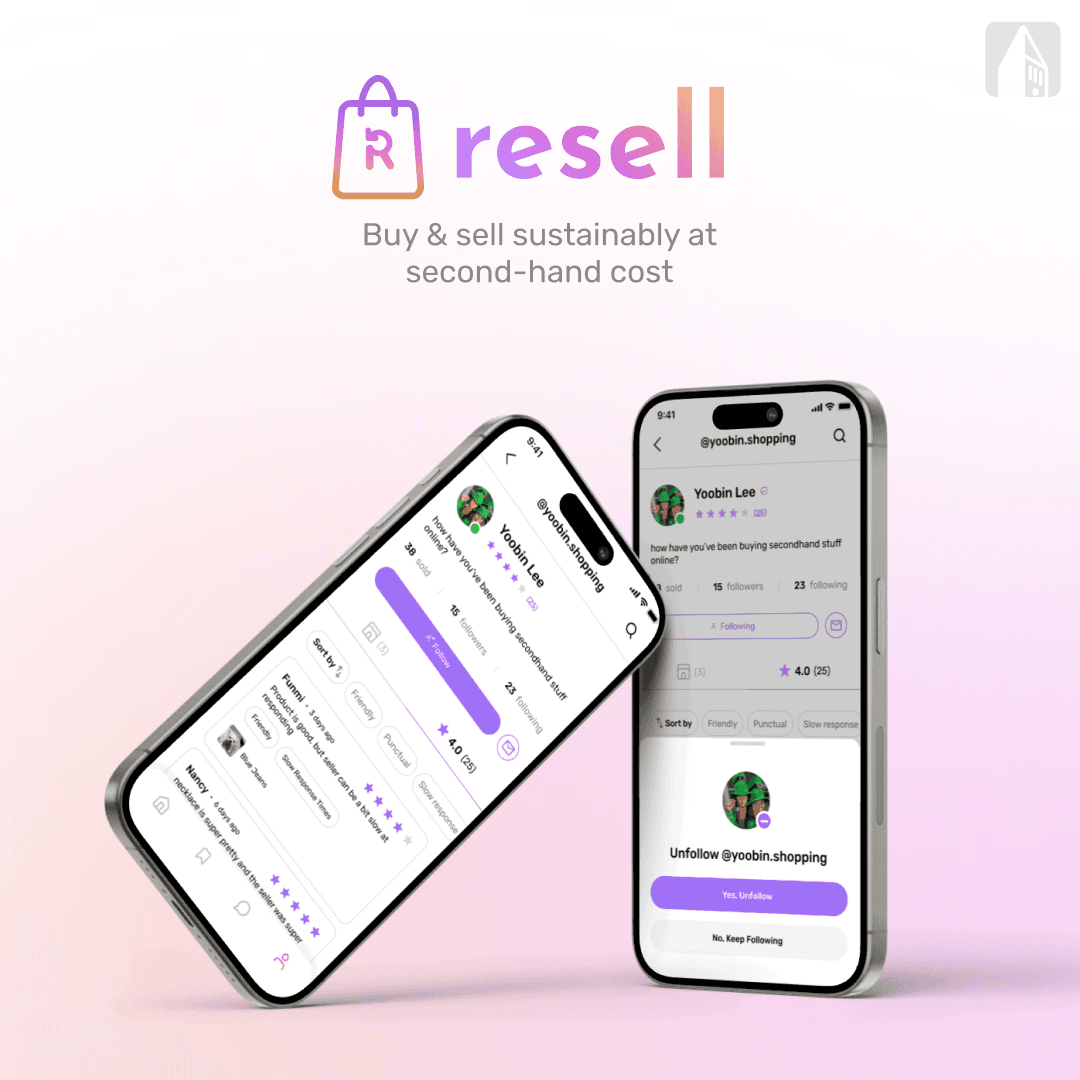
In Trust We Resell 🛍️
User Credibility Feature on Resell: Cornell’s Secondhand Marketplace App
My Role
Product Designer
Team
1 PM
2 Product Designers
8 Developers
1 Marketer
Timeline
Feb - May 2025
Tools
Figma
Notion
What is it like now?
[Context]
Resell, Cornell’s secondhand marketplace app, launched in Spring 2024 with simple MVP.
As the user base grows, the current seller profile — just a name, photo, bio, and listings — makes it harder for buyers to feel confident in who they’re purchasing from.
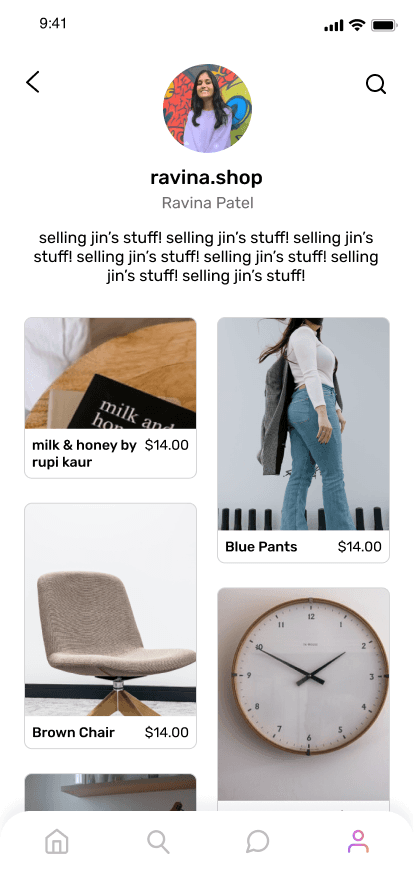
Current seller profile screen
Buyers don’t get enough context to judge whether a seller is trustworthy. With so little information on the profile, people hesitate — and that hesitation slows transactions and lowers trust across the platform.
How might we give buyers clearer, more meaningful signals of a seller’s credibility so they can feel confident completing purchases?
What's the issue?
[Problem Statement]
What should I do about it?
[Goal & Solution]
As a product designer, my goal is to design seller-credibility features that
Give buyers the information they need to feel confident
Increase transparency between buyers and sellers
Strengthen overall trust in the app
What do users think?
[User Research]
After interviewing 10 Cornell students…
Key findings:
🔍 What users look for in sellers
Reviews
Sale history
Item descriptions
Profile completeness (photo, bio)
Response time
Item variety
Follower number
🤝 What Builds Trust
Positive reviews and high ratings
Honest, detailed descriptions and multiple high-quality photos
Smooth communication
Consistent selling behavior or style
⭐ Motivations for Leaving Reviews
Extreme experiences—either exceptionally good or bad
To support trustworthy sellers or warn others
Translating these to key feature ideas…
↓
🔍 What users look for in sellers
View reviews
Number of items sold
Average rating
Average response time
Follower/following visibility
🤝 What Builds Trust
Ratings & reviews
Last active status
Seller style summary tags
Direct message
⭐ Motivations for Leaving Reviews
Upvote / downvote user reviews
[Ideation & Exploration]
How should I design them?
Thankfully, I inherited the previous product designer’s work as a starting point.
5 - 1. Seller Profile Header Design: Evolution Process
Did I miss anything?
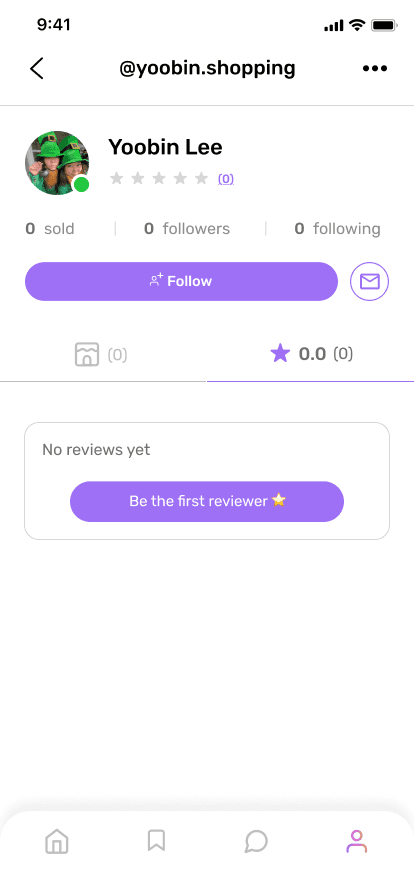
Because Resell is still a young app, many new sellers won’t have much information on their profiles yet. To address this, I designed clear initial states that show what a new profile looks like while still highlighting key features.
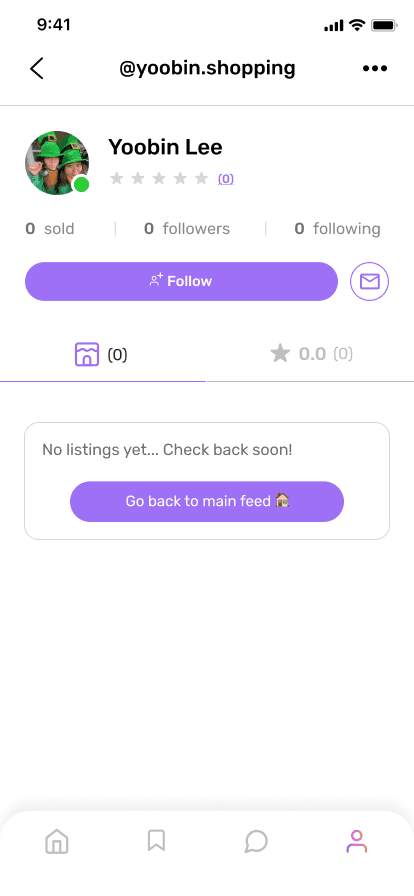
[Edge Cases]
These states encourage users to browse the home feed, become the first reviewer, and engage with the seller — even when there’s limited content available.
Next Steps & Reflection
After several rounds of feedback and iteration with my product design teammates and PM, my designs received final approval. They’ve now been handed off to developers and are currently in implementation.
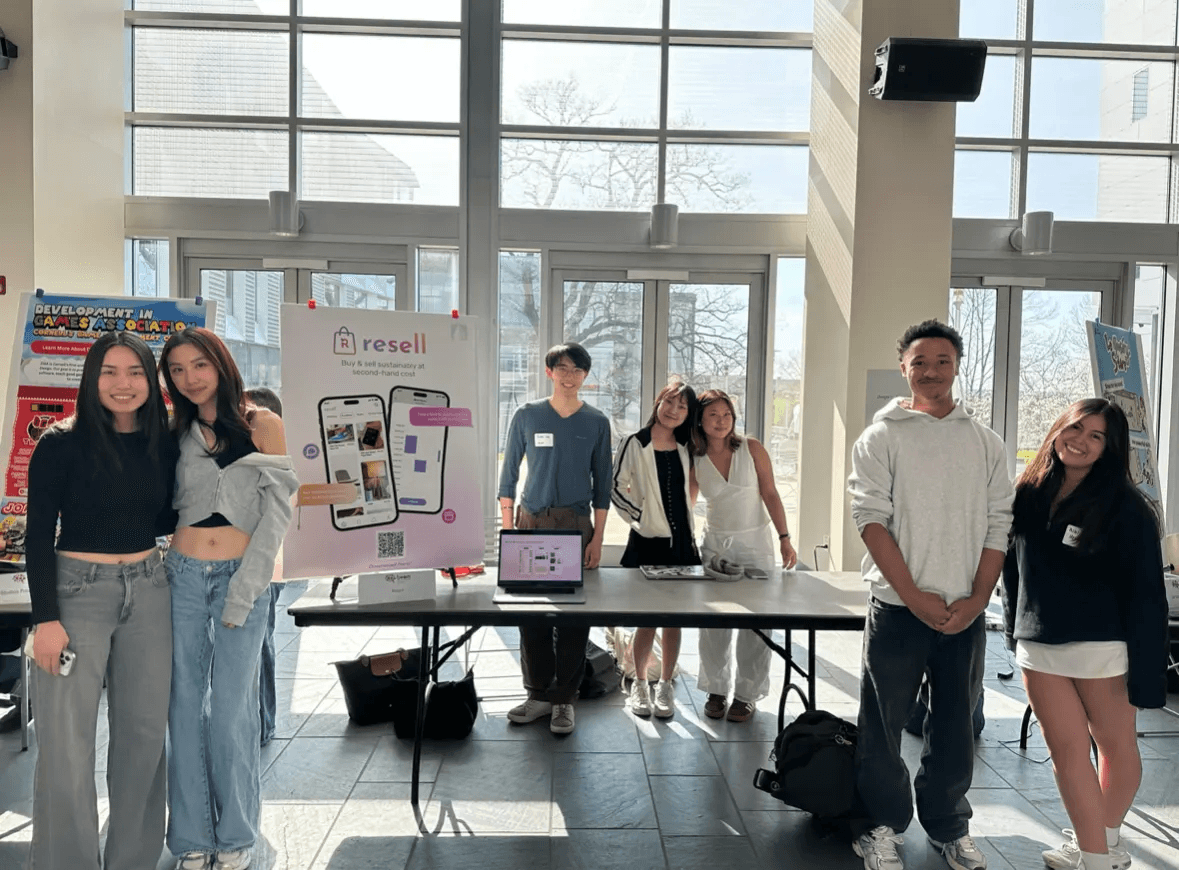
[Presented our project at Cornell’s 2025 BOOM (Bits on Our Minds), Cornell’s tech innovation showcase.]
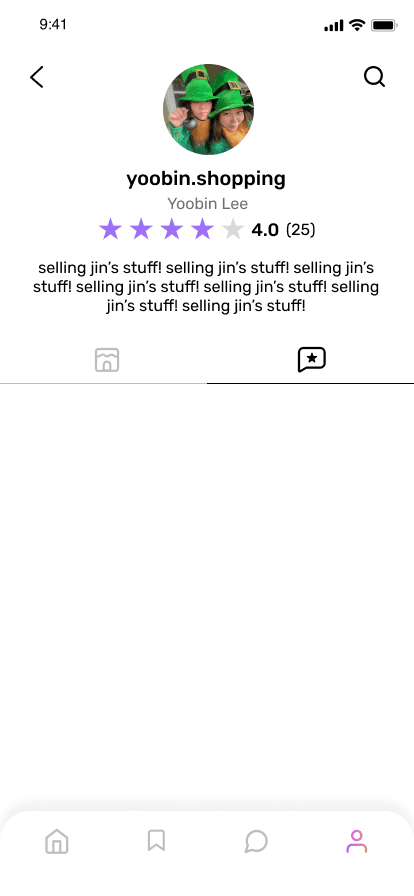
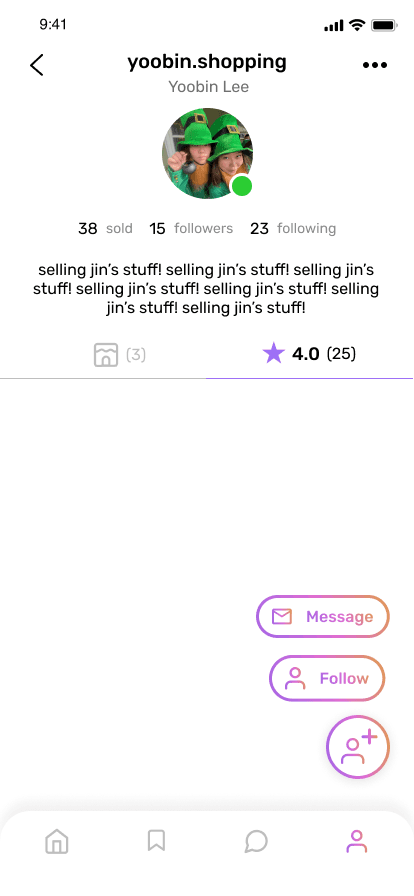
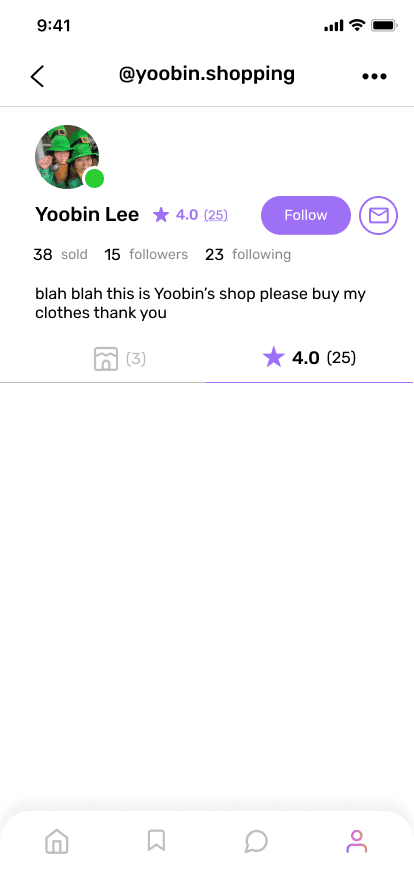
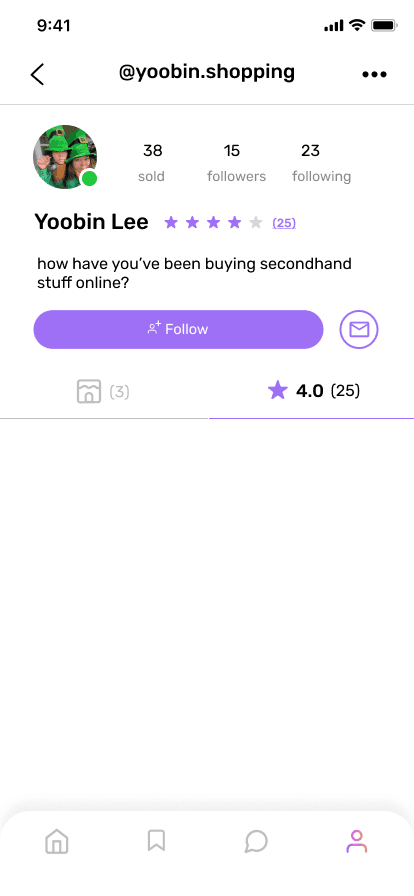
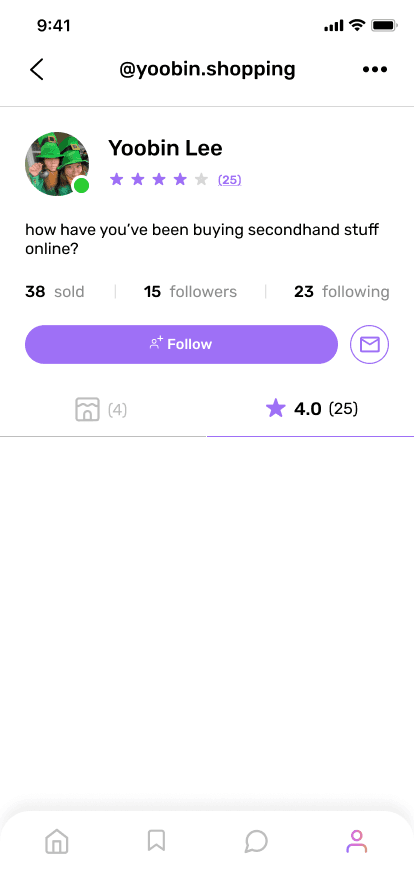
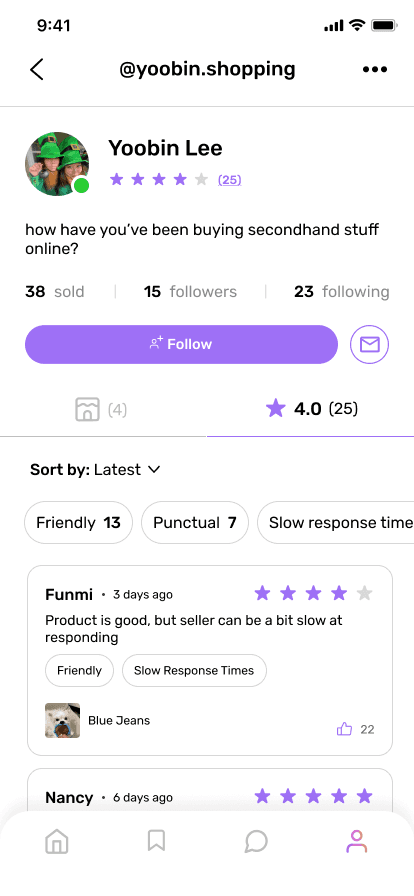
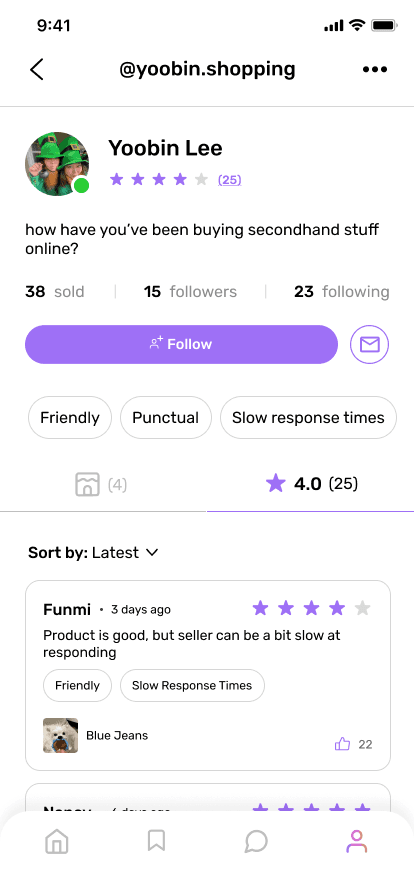
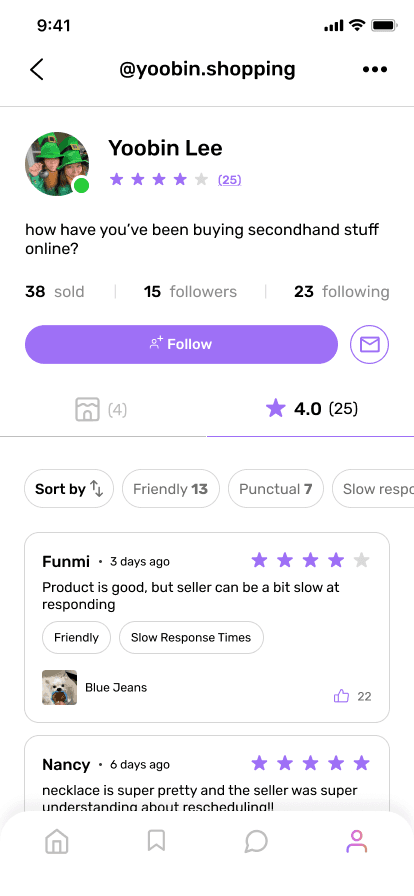
5 - 2. Review Section Design: Evolution Process
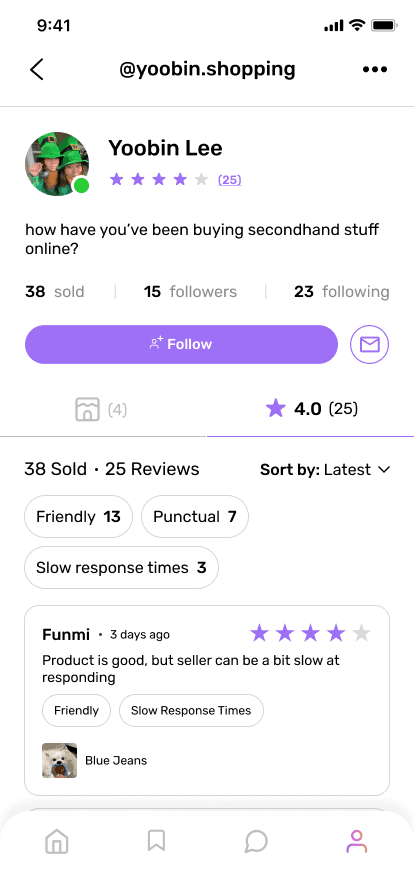
Done!
[Final Prototype]

Instant Credibility Signals
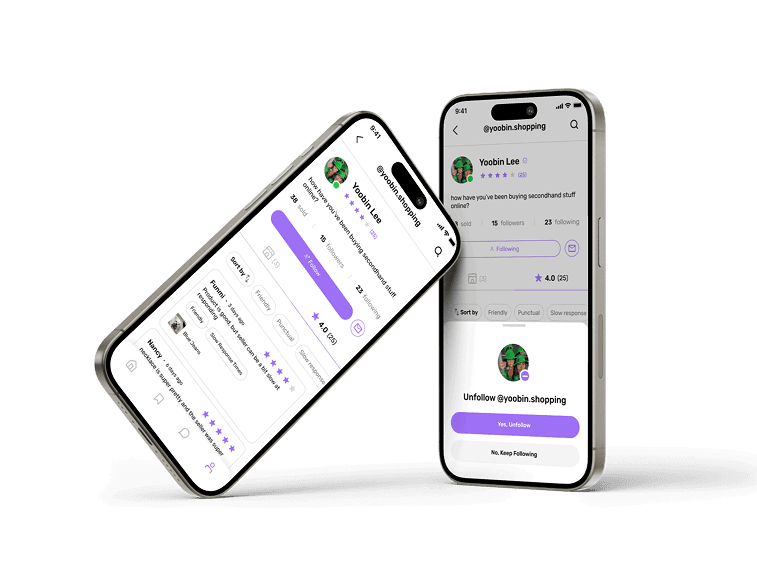
A visible star rating gives buyers an immediate read on a seller’s reliability, while report/block options create a safer environment overall.
Reassuring Buyers with Activity Status
An active status indicator shows whether a seller is currently or recently active, giving buyers more confidence when deciding to reach out or initiate a transaction.
Reducing Clutter While Highlighting Key Actions
As users scroll through listings or reviews, the profile header collapses into a simplified “Follow” bar, keeping the action visible without taking up extra space.
Prioritizing Clarity and Personality
I reorganized the profile layout to surface the information buyers look for first. The bio now appears before the follower count to highlight the seller’s personality rather than their popularity — especially important for a young platform where most users won’t have many followers yet.
Supporting Organic Discovery
Showing followers and following helps buyers naturally discover other sellers, strengthening the community and improving browsing flow.
Improving Communication
I added direct messaging so buyers can contact sellers even if a listing disappears or if they have questions unrelated to a specific item.
↓
↓

Making Reviews Easier to Navigate
I added sorting and filtering options so buyers can quickly find the review information that matters most to them. Seller info tags now default to “most reviewed” for immediate clarity, with the option to switch views when needed.
Encouraging More Lightweight Feedback
To increase engagement, I introduced an “Agree” button. Most students only leave full reviews after very positive or very negative experiences, so giving them a lighter option encourages more everyday feedback.
Promoting Positive Signals Without Limiting Honesty
I intentionally kept the interaction to a single “Agree” button (with no “Disagree”). This helps maintain a positive perception of sellers and supports smoother transactions. Buyers who strongly disagree with a review tend to write their own, which naturally increases review volume and strengthens credibility across the platform.
Let's Connect!
→ yl3697@cornell.edu
© Yoobin Lee 2026
This project pushed me to think beyond just “good UX” and really balance user needs with product goals—especially our focus on increasing sales. I became more intentional about how design choices shape behavior, like making the Follow button more noticeable to boost engagement or adding a bit of friction to unfollowing to help with retention in a way that still feels fair to users.
I also learned how to build new features within an existing design system. Since a lot of the core UI was already established before I joined, I had to make sure everything I added felt consistent and fit naturally into the product.
Another big takeaway was finding the right line between inspiration and originality. I looked at apps like Depop and Instagram for reference, but had to avoid copying their patterns—especially since Resell’s rainbow branding already feels similar to Instagram at first glance. I focused on pulling in ideas only when they aligned with user research and reshaping them into something that felt uniquely “Resell.”